
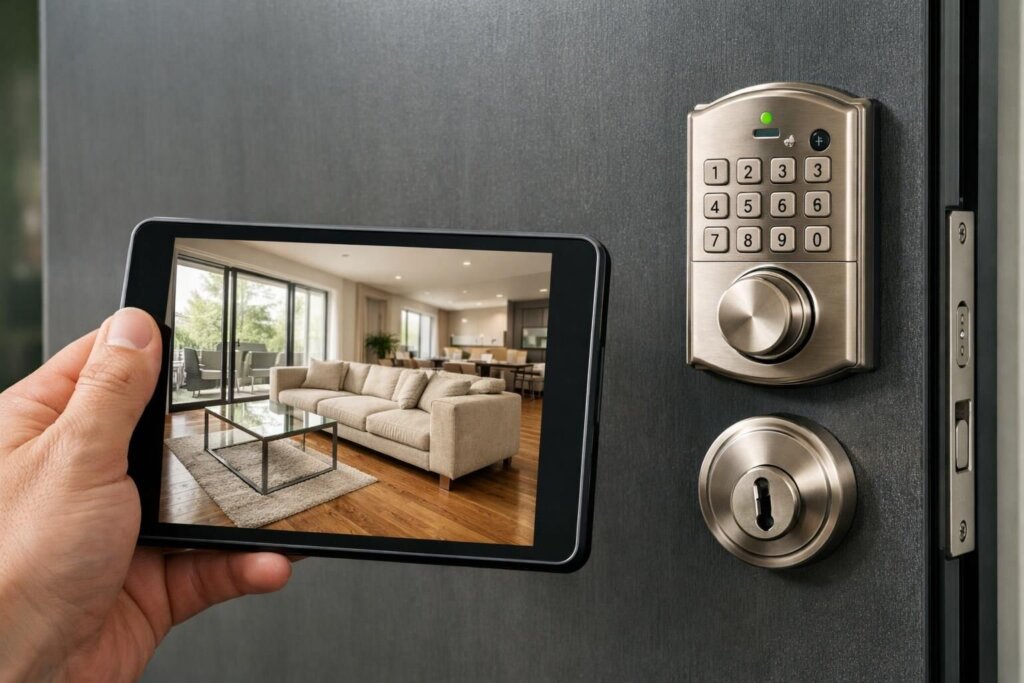
You have already packed, changed your address, and started life somewhere else—but your Erie house is still yours.
Now a contractor needs access. The lawn needs attention. A buyer wants to see the property. Closing paperwork is coming. Flying back to Erie every time something happens quickly becomes impractical.
The good news is that you can often sell an Erie, PA house while living in another state. Much of the communication, document handling, property access, and closing coordination can be managed remotely when the process is set up correctly.
The bigger question is not simply whether a remote sale is possible. It is how to sell without turning the house you left behind into a second job.
Quick Answer: Can You Sell an Erie PA House From Another State?
Yes. You can generally sell an Erie, PA property after moving out of state without returning for every stage of the transaction. Your agent or buyer can coordinate local access, a title or settlement company can handle closing requirements, and Pennsylvania permits remote online notarization for qualifying documents and transactions.
The exact process depends on the property, buyer, title requirements, lender involvement, and settlement company, so tell everyone involved from the beginning that you are an out-of-state seller.
You Already Moved—So the Selling Problem Has Changed
Selling before relocating and selling after relocating are not quite the same problem.
Before a move, you can meet contractors after work, unlock the door for an inspection, clean before a showing, or notice a basement leak yourself.
After moving to North Carolina, Florida, Ohio, Texas, or another state, even small property issues require someone local.
Your priorities often shift toward:
- keeping the property secure;
- controlling ongoing expenses;
- arranging dependable access;
- avoiding unnecessary trips;
- dealing with repairs from a distance;
- completing documents correctly; and
- deciding how much more time you want to remain responsible for the house.
If you have not moved yet, this is not the best page for your situation. See Brandon Buys Houses’ guide to selling an Erie house before moving out of state instead.
This guide is specifically for the homeowner who has already left Erie.
Do You Have to Come Back to Erie to Close?
Not automatically.
Pennsylvania permits both electronic notarization and remote online notarization. With approved remote notarization technology, a qualified Pennsylvania notary can perform certain notarizations while the signer appears through audio-video communication rather than physically standing in front of the notary.
That does not guarantee that every document in every home sale can be completed from your laptop.
Your title company, settlement provider, attorney, buyer, lender, and the type of documents involved can affect what is accepted.
As soon as you have a buyer—or even before listing—tell the settlement professional:
“I live outside Pennsylvania now. How will you handle my closing documents?”
Ask whether you will need:
- electronic signatures;
- remote notarization;
- a local notary where you currently live;
- original documents returned by overnight mail; or
- another signing arrangement.
Sorting this out early is much easier than discovering a problem two days before closing.
For current Pennsylvania requirements, see the Pennsylvania Department of State’s electronic and remote notarization guidance.
First, Make Sure Someone Can Get Into the House
Your physical absence does not eliminate the need for property access.
Depending on how you sell, access may be needed for an agent, photographer, buyer, inspector, appraiser, contractor, title professional, or someone checking the property after bad weather.
A lockbox often makes this easier, but it should be controlled by someone you trust.
You may also want one dependable local person who can answer a simple question:
“If something happens at the house tomorrow morning, who can go there?”
That person might be a relative, neighbor, property manager, agent, or other trusted local contact.
You do not need a large team. You do need a reliable plan.
Treat a Vacant Erie House Differently From an Occupied Home
If nobody is living in the property anymore, contact your insurance provider and explain the change in occupancy.
Do not assume the same coverage and requirements automatically continue after the house becomes vacant.
You should also decide who is responsible for:
- checking the property;
- lawn care;
- snow removal;
- maintaining appropriate utilities;
- collecting mail;
- watching for water problems;
- responding to storm damage; and
- keeping entrances secure.
This matters more in Northwest Pennsylvania than it might in a milder climate.
An Erie property left unattended through freezing weather can develop plumbing problems. Roof leaks can go unnoticed. Snow and ice can expose existing roof or drainage issues. Basement moisture can worsen while nobody is there to see it.
If the property is now empty, Brandon Buys Houses has a separate guide on selling a vacant house in Erie, PA.
Should You Repair the House From Another State?
Sometimes.
If the Erie property is fundamentally sound and a few manageable improvements could materially improve its marketability, arranging repairs may still be worthwhile.
But remote renovation becomes frustrating when you are trying to make dozens of small decisions from hundreds of miles away.
Imagine approving new flooring from another state, then learning the contractor found subfloor damage. Or scheduling a basement repair only to have someone discover old plumbing nearby. Suddenly you are comparing photos, approving change orders, arranging access, and wondering whether anyone is actually checking the completed work.
Before starting, get realistic estimates for:
- what the house could sell for in its current condition;
- what it could reasonably sell for after the proposed repairs;
- what those repairs will actually cost; and
- what you will continue paying while the work and sale are underway.
If the extra work produces a worthwhile financial result, repair first.
If the difference becomes much smaller after expenses and months of remote coordination, selling in the property’s current condition may be more practical.
For that decision, see Can I Sell My House As-Is in Erie, PA? and Pros and Cons of Selling a House As-Is in Erie PA.
Your Main Options for Selling an Erie House Remotely
Being out of state does not mean you have to sell to an investor. You still have several reasonable choices.
| Option | When It May Work Well | What You Manage From Afar |
|---|---|---|
| List with an Erie real estate agent | House is market-ready and you want broad buyer exposure | Offers, inspections, repairs, negotiations and closing |
| List as-is | You want MLS exposure without completing major renovations | Buyer access, inspections and possible negotiations |
| Sell directly for cash | House needs work or you want fewer preparation requirements | Offer review, title work and closing |
| Keep it as a rental | You want to retain the property long-term | Property management, repairs, taxes, insurance and landlord responsibilities |
A traditional listing may be a strong choice for a well-maintained property when maximizing market exposure matters more than simplicity.
A direct sale may deserve more consideration when the house needs substantial work, is full of belongings, or has become difficult to manage from another state.
For a fuller side-by-side explanation, read Cash Home Buyers vs. Real Estate Agents in Erie, PA.
Have the Title Checked Before the End of the Sale
One of the easiest ways to make a remote transaction harder is to discover an old title problem right before closing.
Possible complications include:
- an existing mortgage;
- unpaid property taxes;
- liens or judgments;
- an old owner still appearing in the chain of title;
- inheritance or probate issues;
- divorce-related ownership;
- an unreleased mortgage; or
- incorrect information in recorded documents.
The Erie County Recorder of Deeds records and indexes deeds, mortgages, satisfactions and other real estate documents.
You can find county information through the Erie County Recorder of Deeds.
If you already know about an unusual title issue, tell the title or settlement company early. Time spent resolving it before closing week is usually far easier than trying to solve it while movers, buyers, lenders, and signing deadlines are all waiting.
Selling Remotely Does Not Mean You Can Ignore Property Disclosures
Moving away does not erase whatever disclosure obligations apply to the sale.
Pennsylvania’s Real Estate Seller Disclosure Law generally applies to residential real estate transfers, although the law includes specific exceptions. It requires disclosure of known material defects in transactions covered by the statute.
Pennsylvania’s official seller disclosure form likewise states that a seller must disclose known material defects that are not readily observable.
An as-is sale also should not be interpreted as permission to hide a known problem.
Because exceptions and individual transactions vary, ask your Pennsylvania agent or attorney what disclosure requirements apply to your sale.
See the Pennsylvania Real Estate Seller Disclosure Law for the statutory rules.
Plan the Closing Before Closing Week
A remote closing is much easier when everyone knows where you are.
Give the settlement company your current contact information and ask how it intends to handle signatures, notarization, original documents, identification, and funds.
Also be careful with wire instructions.
Real estate transactions can attract payment-fraud attempts. If you receive an unexpected email changing wiring information, verify it directly with the settlement company using a phone number you already trust rather than simply replying to the message.
Once the process is established, save the key contacts in one place:
buyer or agent → title/settlement company → local property contact → insurance provider
You should know exactly whom to contact if something changes.
Example: The Owner Moved to North Carolina but the Erie House Did Not
Suppose an Erie homeowner moves to North Carolina for a new job.
The old house is empty. Two rooms need flooring, the furnace is aging, and boxes are still sitting in the basement.
Coming back for a weekend sounds manageable at first.
Then flooring estimates require access. A contractor needs another appointment. Someone has to remove the basement items. The grass needs cut. Eventually there will be an inspection and probably another visit.
At this point, the homeowner has three reasonable paths.
They can hire a local Erie agent, arrange the work, and prepare the property for a traditional listing.
They can put it on the market in its present condition.
Or they can compare what a direct buyer would pay for the property without requiring them to finish the repairs first.
The decision becomes clearer when all three choices are put on paper.
Suppose repairing and listing could bring more money. If that difference remains substantial after repairs, commissions, ongoing ownership costs, and travel or management expenses, the extra effort may be justified.
If the financial difference becomes relatively small, the owner may decide that being finished with the Erie house has value of its own.
That is a personal financial decision—not something a cash buyer or agent should make for you.
Common Remote-Sale Mistakes to Avoid
Leaving the house without a local contact
Someone should be able to physically check the property when necessary.
Waiting until the last minute to discuss remote signing
Tell the title or settlement company that you live out of state at the beginning of the transaction.
Renovating from afar without a clear budget
A few repairs are one thing. An open-ended renovation can become difficult to control remotely.
Ignoring insurance after moving
Notify your insurer about the property’s current occupancy and ask what coverage is appropriate.
Assuming as-is means “no responsibilities”
As-is generally describes the condition in which you intend to sell. It does not automatically eliminate title, contract, or applicable disclosure requirements.
Comparing only the highest sale price
Look at how much money and work are involved between today’s condition and closing day.
Sometimes the higher-priced route is still the better choice. Sometimes it is not.
Frequently Asked Questions
Can I sell my Erie PA house without returning to Pennsylvania?
Often, yes. Many parts of a sale can be coordinated remotely, but property access and closing requirements still need to be arranged with the professionals handling your transaction.
Can I close on an Erie house while living in another state?
Potentially. Pennsylvania permits remote online notarization, and settlement providers may offer other signing arrangements. Confirm the exact process with your title or settlement company before closing.
Can I sell my Erie house for cash after moving out of Pennsylvania?
Yes. You can consider direct cash buyers even after relocating. Compare the offer with your other options, including listing through an Erie agent, and consider the property’s condition, expenses, and amount of remote work involved.
Can I sell my Erie house as-is while living out of state?
Yes. You may be able to list the property as-is or sell directly without completing repairs first. Known defects and other applicable seller obligations still need to be handled appropriately.
How will buyers get into my house if I no longer live in Erie?
An agent, buyer, property manager, or trusted local contact can coordinate access. A secure lockbox may also be appropriate depending on how the property is being marketed.
Should I repair my Erie house before selling remotely?
Repairing may be worthwhile when the expected increase in sale proceeds clearly justifies the cost and added coordination. Get realistic estimates before committing to a renovation from another state.
What should I do if my Erie house is sitting vacant after I moved?
Review insurance, security, utilities, lawn or snow maintenance, and regular property checks. Address leaks, heating problems, roof damage, or other maintenance concerns promptly rather than waiting until a buyer discovers them.
If Managing the Erie House From Afar Is Becoming Too Much
You do not need to choose a cash sale simply because you moved away.
A well-maintained house may be a good candidate for a traditional listing, and an experienced Erie agent can handle much of the local work for you.
But a different calculation may make sense if the property needs repairs, still contains belongings, is vacant, or is becoming difficult to manage from another state.
Brandon Buys Houses is one option for homeowners who want to compare a direct as-is sale with listing on the open market. The company states that it buys Erie houses directly without requiring sellers to complete repairs, cleaning, or traditional showings before the sale.
You can review how Brandon Buys Houses buys Erie properties, compare the numbers with your other selling options, and decide which approach fits your situation.
Erie and Pennsylvania Resources for Remote Sellers
For official information related to an out-of-state Erie home sale:
- Pennsylvania Department of State — Electronic and Remote Notarization
- Pennsylvania Real Estate Seller Disclosure Law
- Pennsylvania Seller Property Disclosure Statement
- Erie County Recorder of Deeds